
3rd Grade Academic Routines
Routines to help your students grow & help you keep your sanity!
What is an academic routine?
An academic routine is something that students do every day to help them develop a specific skill. These routines typically have a consistent format, like a worksheet or bulletin board activity students do every day. Some examples of academic routines are number of the day or word of the day. However, there are so many other options as well!
Why use daily academic routines?
Daily academic routines are beneficial for both you and your students. Students use the same format every day during an academic routine which allows them to focus on the content more, as they do not need to figure out a new format. It gives them the opportunity to practice skills and develop consistency.
These routines are also helpful for you because you do not need to spend as much time during your prep to make sure you have everything ready. When you do the same thing every day, for example, morning work, or during the first 5 minutes of math, you have more time to prepare and make sure you have everything ready for the new skills you will teach that day.
Examples of Academic Routines
1. Number of the Day
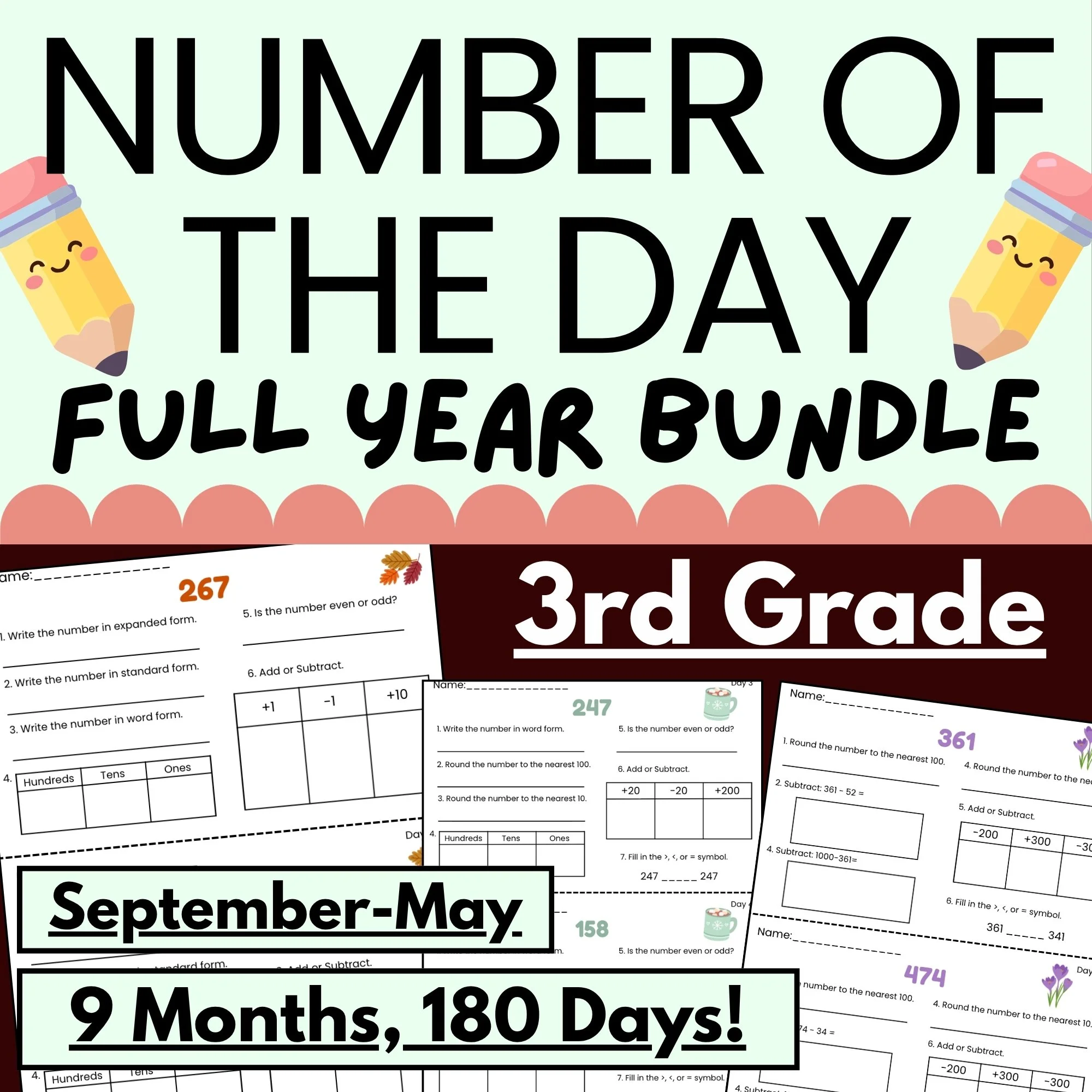
Number of the day is a spiral routine where students build number sense. They are given a different number every day, and they must represent or manipulate that number in multiple ways. If your math block does not follow a prep, this is the perfect way to have 5 minutes at the start of class to prepare your lesson and put out your materials while giving your students something productive.
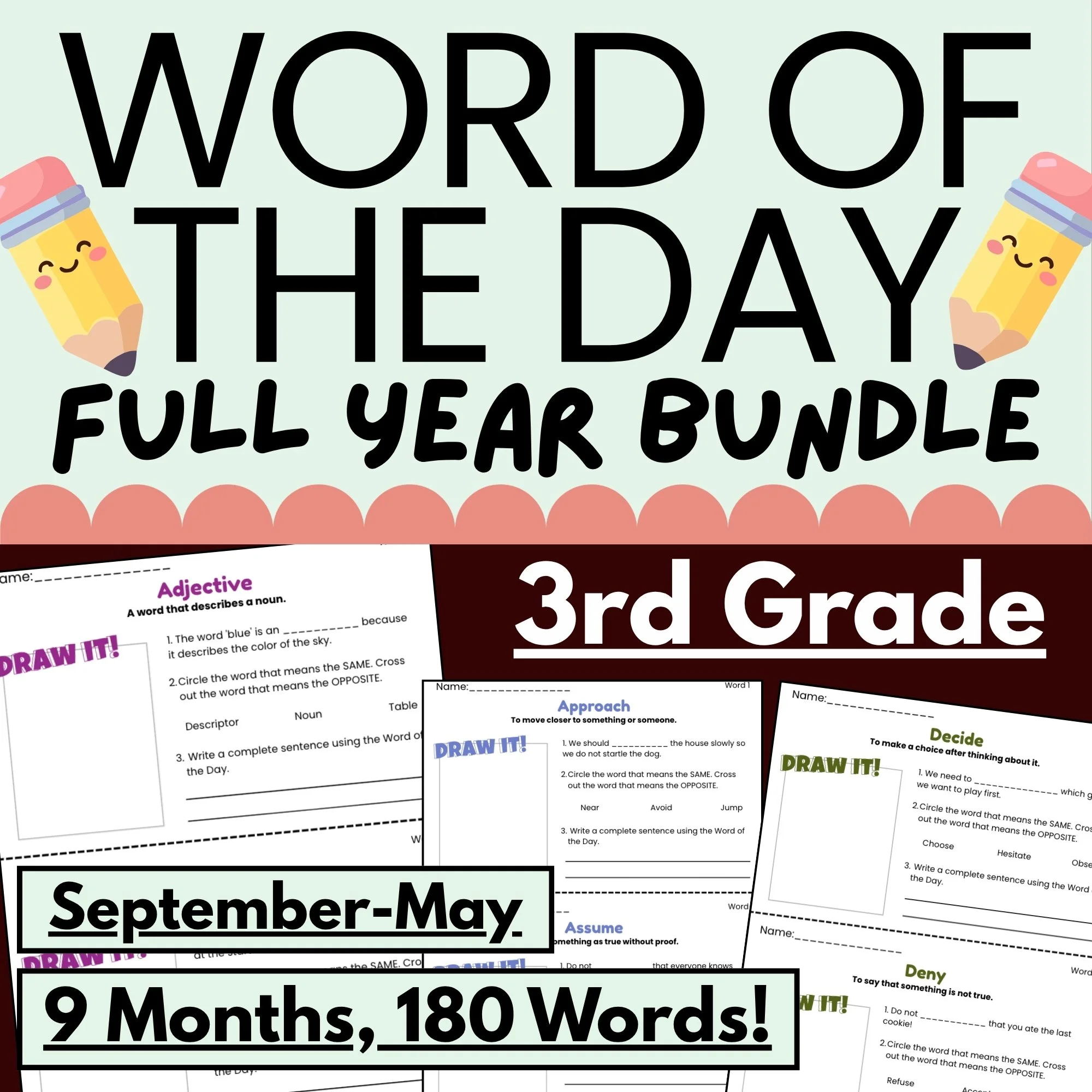
Word of the day is a vocabulary-building routine. Students are given a tier 2 vocabulary word and definition and must do different activities using that word. For example, they may fill in the blank, use it in a sentence, or draw a picture to represent the word. My 3rd graders loved drawing pictures for their vocabulary words and would often come up with very creative ways to represent their meanings! This helped them remember the words as they interacted with them.
I am always so overwhelmed by vocabulary instruction. There are so many ways to incorporate and teach vocabulary. This routine helps students have a daily vocabulary mini lesson and interact with a new word every day.
2. Word of the Day
3. Daily Vocabulary in Context
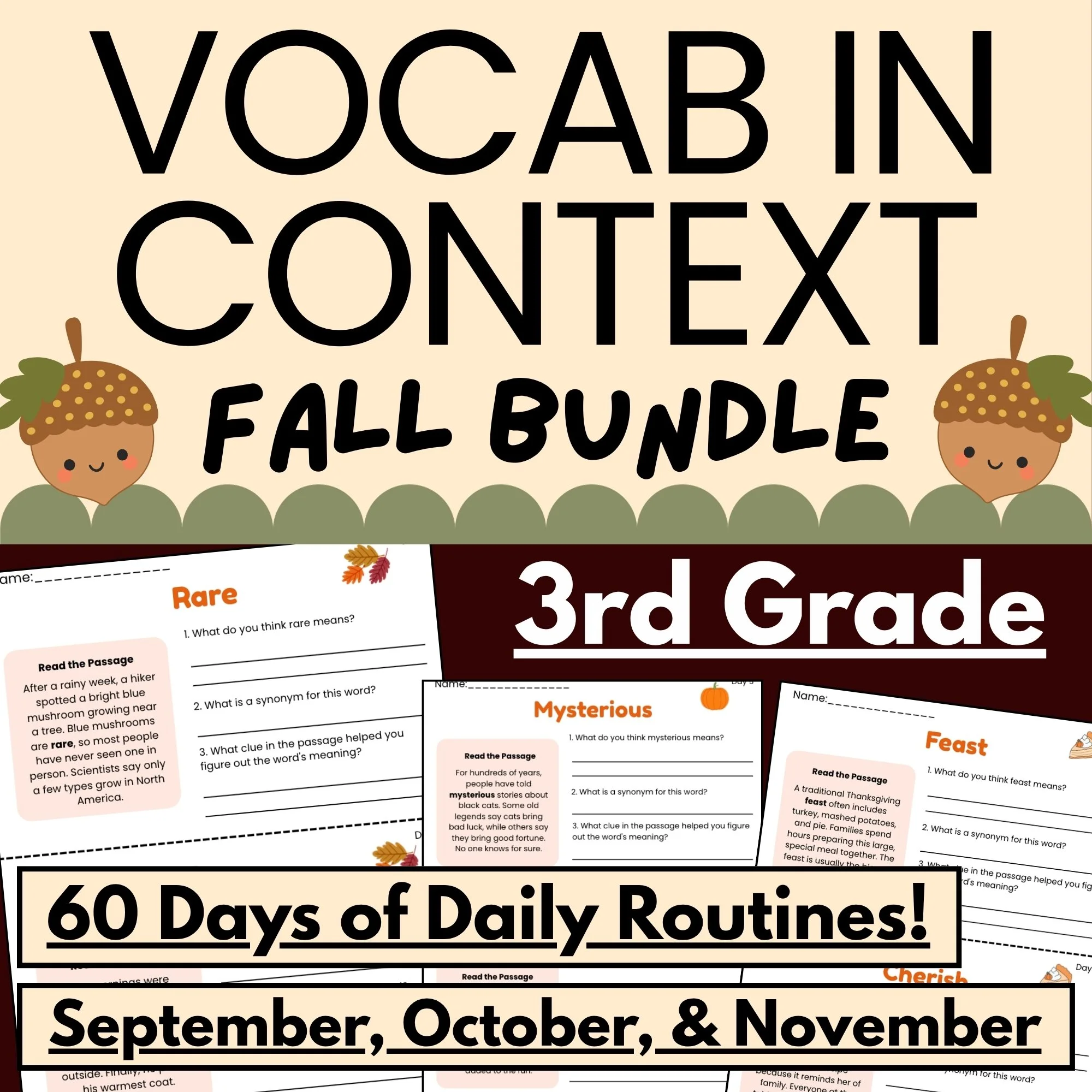
Daily vocabulary in context is a routine where students are given a short paragraph with a bolded vocabulary word in it. They must use context clues to determine the vocabulary word, identify synonyms and antonyms, and name the clue they used to find the meaning.
Vocabulary in context is a great routine because it combines 2 essential testing skills. Students must use context clues and also interact with new Tier 2 vocabulary words.
4. Daily Sentence Editing: Grammar
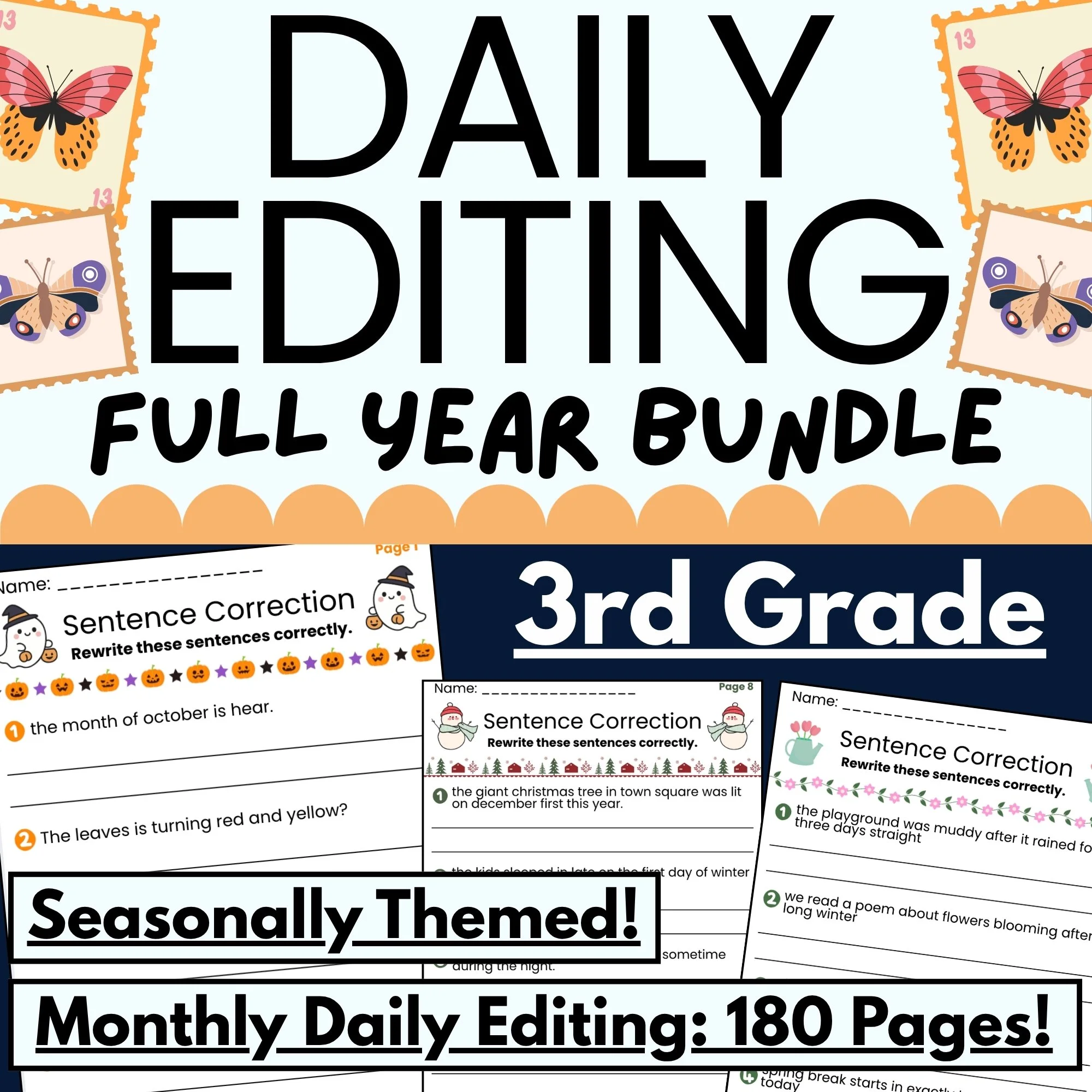
If you are tired of reminding students to put a period at the end of their sentences and capitalize the first letter, this routine is for you. Every day, students correct sentences and practice grammar skills such as subject verb agreement, plurals, commas in a series, and more. I think that this is a great routine to send home for homework each night. Students can do this easily with parent help. This routine is tempting to use for morning work, however, once students get in this routine, they typically get these worksheets done pretty quickly. When I taught 3rd grade, I would use one worksheet to teach it on Monday, and then send it home as homework Monday through Thursday. It also works well at the beginning of a writing block, so you can have some time to make sure all your materials are prepared.
5. Reading Comprehension
Having a daily reading comprehension routine can help students build specific reading skills. It helps them prepare for test questions and creates a bridge between in-class instruction and multiple-choice test questions.
The drawback to this routine is that it takes a long time, and students often do not finish their worksheets at the same time. However, I found it works well as homework. Combining an intentional reading comprehension worksheet with daily editing makes the perfect consistent nightly homework routine!

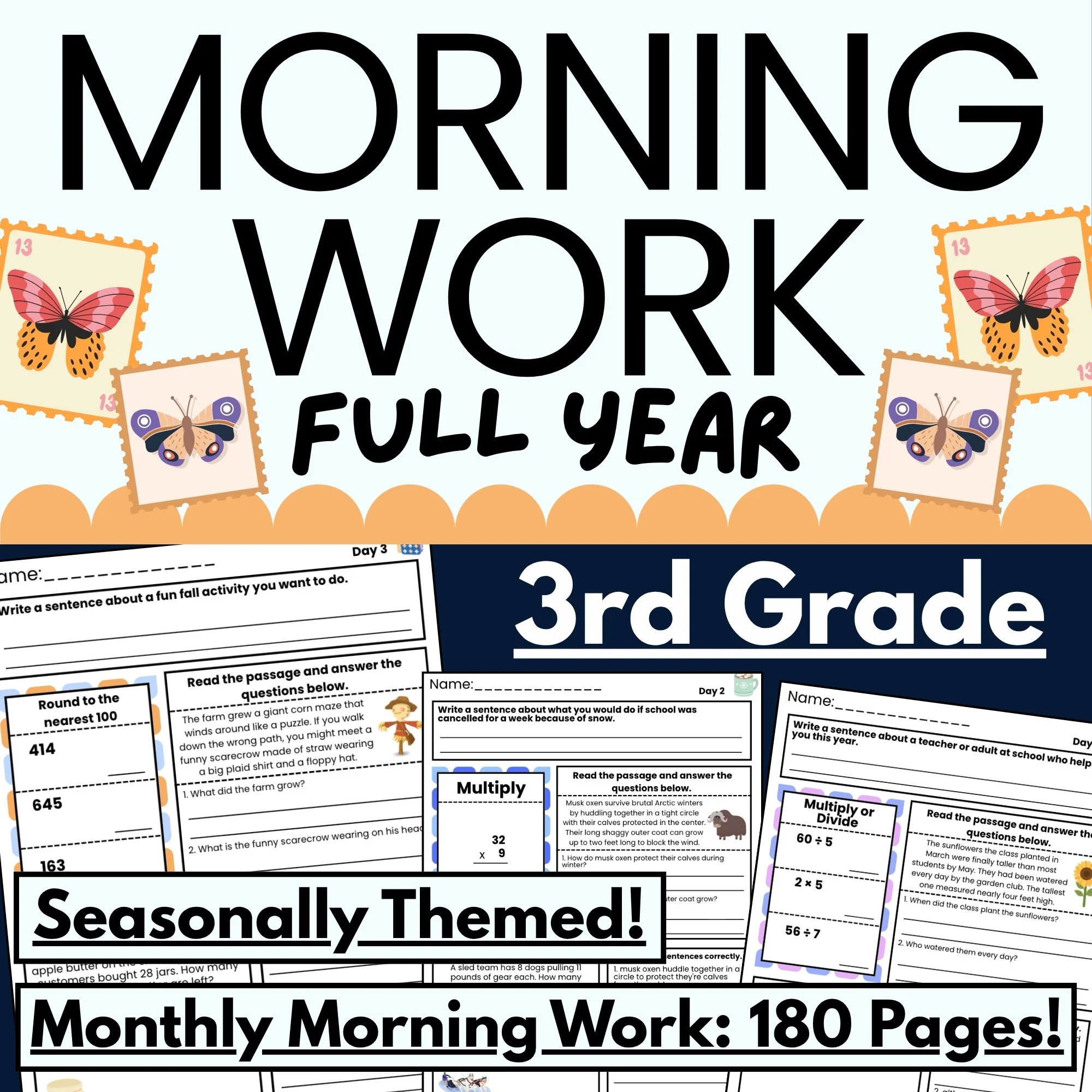
Having a consistent morning work routine helps alleviate so much stress for you as a teacher. When I was teaching 3rd grade, I was always scrambling for meaningful morning work that my students would not finish in 5 minutes. When I finally created a spiral, full-year set of morning work, that is when my routine fell into place, and my mornings became calmer.
Morning work can be almost any academic routine. You can use number of the day, word of the day, a combination of both, a set of writing prompts, daily editing, and more. However, I find a spiral multi-subject morning work to be the best option, as it takes longer and covers math, reading, and writing.
6. Morning Work
I have talked about how daily routines can be used to give you some extra time to prepare materials. However, if you do not properly set expectations for this time, it can quickly turn to chaos. The first few weeks, take some time to make sure your students have this routine down. Have them practice what to do, what they should do when they finish, and how to check work. Make sure that you create a routine where students are not coming up to you, or you will not be able to prepare the materials you need! Make sure you have clear expectations on what a student should do if there is something they do not understand.
This can easily be one of the most chaotic or one of the calmest parts of your day. Set high expectations and this routine could give your students not just skill practice, but also an opportunity to ground themselves before you start your next lesson.